Category Archives: Features

Call for Questions: Help Shape Our Library Interview Workshop at the 53rd ARLIS/NA Annual Conference!

Are you curious about the library job interview process? Here’s your chance to get your questions answered by early career librarians and experienced leaders involved in recruitment!

The ArLiSNAP team is excited to share that at this year’s ARLIS/NA Conference, there will be a special workshop designed to help with your questions. Beyond Basics: The Art of the Library Interview will feature an academic fine arts library, a museum library, an art and design school library, and a public library special collections. The workshop will take place on Thursday, May 15, 2025, from 2:00 pm – 3:15 pm. Find more information about the workshop and add it to your Sched here: Beyond Basics: The Art of the Library Interview.

We want to make sure this workshop speaks directly to the questions and concerns of our the ArLisNAP community. That’s where you come in!

Please send us your questions about the job interview process — no question is too big or too small. We’ll bring your questions to the panel and get the inside scoop straight from the experts.

To submit your questions, please email our conference planning team, Heidi Bechler and Ruth Thomas, at hbechler@scad.edu and RThomas@indianpueblo.org.

We can’t wait to hear from you!

Interviews with Canadian Art Librarians & Archivists Blog Series: Amy Marshall Furness (she/her), Rosamond Ivey Special Collections Archivist and Head, Edward P. Taylor Library & Archives, Art Gallery of Ontario (AGO)

Photo Credit: Photographer unknown. From: https://www.zoominfo.com/p/Amy-Furness/79182885

Bio: Amy Marshall Furness has been the Rosamond Ivey Special Collections Archivist and Head at the Library & Archives at the Art Gallery of Ontario since 2016 and has been responsible for the AGO’s Special Collections since 2001.

Interviewer: Ashley Huot, Canadian ArLiSNAP Co-Liaison

INTERVIEW

  1. Can you tell us about your background and how you got into the field of art archives / librarianship? Where did you go to graduate school and what did you specialize in?
    • I studied art history at the undergraduate and graduate level before pursuing a master’s degree in archival studies – I knew I wanted to work with collections, and I’d been volunteering at the city archives.
  2. Where do you currently work?
    • I started my first role at the AGO as a library assistant during the first semester of my archives program and fell in love with the Library & Archives. Seeing the way that Canadian art histories are written from the raw material of these collections was hugely exciting. After a couple of years, I was hired as the first Special Collections Archivist, and in 2016 I was promoted to Head, Library & Archives (I still do both jobs).
  3. How did you find your current position?
    • I definitely owe a lot of my career development to being in the right place at the right time, but I’ve often tried to exercise leadership without having actual power, and I think that has helped me move forward, or at least to keep me engaged in my work. 
  4. What work experience (volunteer and/or paid) did you find to be the most helpful for your career?
    • I’ve had a very focused career at a single institution, so obviously all of my work at AGO has been helpful for my career. The volunteer work that I’ve done through various professional organizations, including ARLIS/NA, has also been extremely helpful for learning collaborative working and project management skills, and for building relationships across professional communities, which in my mind is a major aspect of a career.
  5. What do you wish you knew about arts and culture librarianship / archives as a student studying in a Canadian context?
    • I studied art history as an undergrad in the 1990s at a university with very limited offerings in the Canadian field. I wish I’d had a better understanding then of what primary source research can actually look like – how it can be rich, nuanced, exciting and close to home. When we talked about archival research it always seemed to involve traveling to Europe to look at centuries-old ledger books. It can, and that’s exciting in its own right, but it didn’t reveal a career path. Only when I started working at the AGO did I become familiar with the depth of archival and published primary source materials that are available in Canadian institutions, and how much new ground they represent for art research. I wish my undergrad had involved that kind of primary research training.
  6. Are there specific courses / workshops / professional development opportunities that you found helpful for getting a more well-rounded and specialized skillset for the work you do now?
    • Apart from obvious coursework in archival studies, I’m glad I took courses in rare books, material culture, and legal literature. The first two of those are related to being able to work comfortably across the GLAM silos, which is essential for leading a combined library/archives in an art museum setting. Legal literature has proven to be a vital piece of background in my career because the laws around privacy and intellectual property continue to evolve. Librarians and archivists need to understand how that evolution works, what the implications and side effects might be for their work, and how to participate in consultations and advocacy around legislative changes.
  7. Do you have any advice for current students and those entering the GLAM job market from a Canadian context?
    • Obviously it’s a tough job market right now, and the sector in Canada is small, so I want to be realistic about that. I do think it’s essential to make professional connections before you graduate, whether through practicums, part-time work, or less formal encounters with people at the institutions that you’d love to work at – e.g. informational interviews, or coffee meetings, or attending public programs.
  8. Do you have any additional tips or resources that you’d like to share about any of the following:
    • Job applications – When applying for a job that really interests you, try as much as possible to reflect your specific curiosity and knowledge of the institution in your application.
    • Mentorship opportunities – Many professionals are spread very thin these days and may not be able to participate in a formal or sustained mentorship program. Consider seeking informational interviews or coffee chats with people whose jobs you find intriguing.
  9. What do you enjoy most and what do you enjoy least about being an archivist in cultural heritage?  
    • What I love most is the opportunity to participate in the work of the art museum – the exhibitions, the collecting, the public programs, the community – in a role that is pretty central, but also usually at a remove from the most challenging politics of the institution. That’s not at all to say that museums, archives or libraries are neutral. But in the Library & Archives we are in a position to document, witness, facilitate and help people make connections with the published and unpublished record of current and past thinking. The Library & Archives often feels like a bit of a sanctuary and a place where people can connect with the really important ongoing work of the museum, and I think people love us for that. Sometimes that slight remove means we get overlooked, underfunded or otherwise not invited to the table, so maybe that’s the thing I enjoy least as well.

Blog Series Description: Interviews with Canadian Art Librarians & Archivists is a blog series that highlights the professional trajectories of established and mid-career Canadian librarians and archivists working at the intersections of arts, culture, and information in Canada, the US, and internationally. This series supports students and early-career information professionals entering into arts librarianship from a Canadian context by providing valuable insights into pursuing this work and sharing a variety of career trajectories. Over the coming months, interviews will be released on the ArLiSNAP website and Instagram. This project was initiated by Ashley Huot and Emma Metcalfe Hurst, the Canadian Co-Liaisons for ArLiSNAP since 2022.

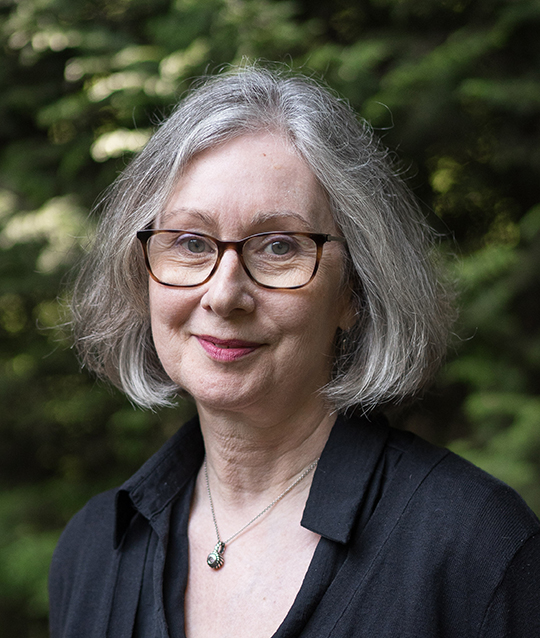
Interviews with Canadian Art Librarians & Archivists Blog Series: Jane Devine Mejia, UBC iSchool Co-op Education Manager

Photo Credit: Photograph by Oliver Mann, 2023. From: https://artscoop.ubc.ca/profile/jane-devine-mejia/

Bio: Jane Devine Mejia is the iSchool Co-op Education Manager at the University of British Columbia in Vancouver, Canada. She was previously Chief Librarian at the Vancouver Art Gallery. Jane spent a decade in the UK, where she served as Faculty Librarian, Modern & Medieval Languages & Linguistics Library, University of Cambridge and was a collections development manager at Screen Archive South East, University of Brighton. From 1997-2004, Jane was the Architecture/Art Librarian at the University of Notre Dame (USA) and she has worked in Montreal as Information Services & Systems Librarian for the National Film Board of Canada. Her career began as a library assistant at the Vancouver Public Library, where she later worked as a librarian in the Fine Arts & Music Division. Jane was active in ARLIS/NA for many years, as a member and chapter chair of ARLIS/Northwest and ARLIS/Midstates, as well as a member of ARLIS/Montreal-Ottawa-Quebec. In 1996-97, she was the Canadian Representative on the ARLIS/NA board and spearheaded the creation of ARLIS/Canada along with Murray Waddington, Head of the National Gallery of Canada Library and Archives. Jane holds a BA (Hon.) in History and an MLS from McGill University, Montreal.

Interviewer: Emma Metcalfe Hurst, Canadian ArLiSNAP Co-Liaison

INTERVIEW

  1. Can you tell us about your background and how you got into the field of art archives/librarianship? Where did you go to graduate school and what did you specialize in?
    • I’m from Vancouver and I spent 2 years at UBC as an undergraduate where I took various electives in French, English Literature, History, and Art History. Then, I spent a summer on exchange to Quebec City on a student work exchange program and I fell in love with Quebec. While there, I went to Montréal, visited McGill, and decided to transfer. When I arrived, I was starting third year and had to choose a major. I decided to choose history as it allowed me to do work related to art and to use my French, so it was the broadest possible option. After graduating, I took a gap year and worked in a children’s bookstore in Montréal, did some freelance visual research, and then got a job at Vancouver Public Library (VPL) where I spent 9-10 months as a Library Assistant I, doing shelving, fixing printers, things like that. At that time, they had a fine arts and music division, and I was primarily working there, so I had that exposure to the workplace. I was trying to decide between an MA in art history and a library degree but applied to McGill and got into library school. At first, I thought I was going to be a public librarian, but then I distinctly remember Loren Lerner coming over from Concordia University to talk to us about her work as an art librarian and establishing the ARLIS/NA MOQ Chapter and I realized that’s what I wanted to do — it all came together. When I graduated, it was a recession, and there weren’t a lot of jobs, so I worked part-time for a public library and I got a job with the Canadian Architecture Collection at McGill, working on a special project to catalog part of the collection, cataloging an architect’s fonds, and then I went to the National Film Board of Canada (NFB). I wasn’t always able to work in art; I worked in film, rare books and special collections, and other related things, but I always knew that I wanted to work in arts and culture. 
  2. What did you specialize in?
    • When I was at McGill, we couldn’t really specialize, we could only take electives. I tried to take every opportunity to further my own areas of interest through some of the coursework I was doing, because there wasn’t a course in art librarianship.
  3. Where do you currently work?
    • I currently work with the UBC Faculty of Arts Co-op Office as the iSchool Co-op Education Manager. My job involves developing paid co-op work opportunities for students in the Master of Archival Studies, Master of Library and Information Studies or dual degree programs at UBC.
  4. How did you find your current position?
    • I am replacing someone who has been seconded. I was a co-op employer before I started this position and I also served on the UBC iSchool Co-op advisory committee.
  5. What position were you previously in?
    • I was Chief Librarian at the Vancouver Art Gallery for six years, in charge of managing their art reference library and archives, providing reference services to gallery staff and the public and handling collection development.
  6. What was your first arts librarianship position?
    • My first position was as a student assistant in the McGill Library Rare Books and Special Collections Department during library school. My first job after graduate school was with the Canadian Architecture Collection at McGill, which was part of the Blackader-Lauterman Library of Architecture and Art. I was working as the publications coordinator in the early days of desktop computing. We were creating a database of the architectural drawings using a precursor to FileMaker called Dbase III. There was a team of architectural historians, librarians and students, led by Irena Žantovská Murray, Head of the Blackader-Lauterman Library. I had to work with the architects to decide how to organize the drawings, make them accessible, and figure out which drawings belonged to which project. That was really exciting because I was already interested in architecture, and I learned so much. It gave me confidence that I could enter a project about which I had no prior knowledge, and I could bring my skills, I could learn, build a database and edit publications. 
  7. How did you hear about the position?
    • Word of mouth! It’s about the professional network. As I said, I was working part-time at a public library and trying to find something aligned with my interests. One of the archivists at McGill tipped me off about a SHHRC project and they were asking around for new graduates. It was after hearing that — being in the right place at the right time – that I went to the Art and Architecture Library and said I’m interested in the project and asked how to get involved. I was also willing to be paid a less then professional wage so that I could get the experience. I was there for about 10 months, and I can say that the project launched the careers of several other people in arts and culture libraries across the country too. 
  8. What work experience (volunteer and/or paid) did you find to be the most helpful for your career?
    • Obviously, the SSHRC project launched my career as an art and architecture librarian but being involved in ARLIS/NA and serving on interest groups, committees, meeting people was critical. I consider that the single-most important volunteer experience, at the chapter level and as the Canadian rep on the board in 1996-97.
    • Each job that I did helped me to acquire specific skills. I spent 8 years at the NFB in Montréal, working with a database unit to promote awareness and distribution of Canadian film. It wasn’t a library job, and I was feeling a bit pigeonholed, so I returned to VPL where I worked as a fine arts and music librarian. The time that I spent there allowed me to become an academic librarian in the US, because I had that solid three years doing reference in a specialized division of a public library and they regarded that very favorably because they had a big emphasis on undergraduate programs. It was a matter of identifying my skill gaps and trying to fill them. So, working in public librarianship was very adaptable to working at the University of Notre Dame. I could also see what type of commitment was involved in arts librarianship and you couldn’t be half-hearted about it.
  9. What do you wish you knew about arts librarianship / archives as a student studying in a Canadian context?
    • At the time I studied, it was pre-internet. There was not a lot of information about what was going on across the country, everything was very regional. The vastness of our country continues to be a challenge today and now we have even fewer institutions, and opportunities in arts librarianship. That wouldn’t have deterred me in any case, but having French as a second language made my career possible. I could not have worked at NFB or been involved with ARLIS/NA MOQ without it. For anyone who wants to work at a federal institution or an institution that is inclusive of the full Canadian context, you have to have at least some French. It was also clear that it was a “design your own degree” situation as there wasn’t an obvious path into the profession and no art librarianship classes were offered at McGill. I don’t know if that’s changed very much. Melva Dwyer might have taught a class in art librarianship many years ago at UBC and Loren Lerner may have taught one at McGill, but there was nothing consistent in Canada. There were very few educational opportunities to learn about art librarianship. The specialization at Indiana University established by BJ Irvine is a popular program for art librarianship in the States. 
  10. Are there specific courses / workshops / professional development opportunities that you found helpful for getting a more well-rounded and specialized skill set for the work you do now or have done?
    • I mentioned languages and, out of interest, I did a certificate in Italian. If you’re going to be an art librarian, you need more than one language, whether that’s French, Italian, Spanish, German or Japanese.
    • ARLIS/NA offered the best professional development opportunities, whether that’s getting involved in the local and regional chapters or attending the national conference.
    • I wish I had taken a class in preservation. I had to pick up a lot on the job working with conservators and curators.
    • I also wish I’d taken a “History of the Book” class, which is beneficial for working with rare art books and having a better understanding of the book as artifact. There is the Rare Book School. It is valuable to understand the genesis of the book, current trends in art publishing, digitizing projects, cataloging, as well as contemporary publishing.
    • An understanding of basic terminology and identification of art types and studio arts. This helps you understand what materials and which media students are working in. Whether that’s taking an art class, or joining a club, having that physical knowledge really helps to have a material understanding. It also improves your credibility with BFA and MFA students, as it helps you understand some of the challenges they’re facing.
    • When you’re working with art students, you need to go to their shows and be connected to really understand physically what they’re doing. Going to their shows and supporting them is part of your professional development. 
  11. Do you have any advice for current students and/or those in or entering the GLAM job market from the Canadian context?
    • It’s challenging. Over the past 30 years of my career, staffing levels have declined –especially in museum libraries, which are becoming an endangered species in Canada. You have to be very intentional and committed. You have to be willing to take on contracts, work on grant-funded projects, and be strategic about following job lists, monitoring things closely, and using your professional network to hear about things. Try to find openings such as a residency, internship, and fellowships to get your foot in the door. 
    • I worked in Canada for the first 11-12 years of my career and then went to the US for 7 years. There were no art library jobs in Canada at that point, so it was either leave the country or work in public librarianship and wait. You must be willing to move around and across the country to various institutions.
  12. Do you have any additional tips or resources that you’d like to share about any the following:
    • Job boards – The ARLIS/NA job postings would be the main website, but it’s also useful to keep an eye on the Chronicle of Higher Education in the States, SLA, LinkedIn, and government job boards. Think: “What’s the type of thing I want to do? What kind of institution is it? And where do those institutions advertise their positions?” For instance, the National Gallery is in the government sector, so the places they post won’t necessarily be art-related. If you’re looking regionally, you may have to make a list of all the institutions on a regional or local level, then mine the local job listings as there is no master index. LinkedIn is useful for reaching out to people and notifications, but in terms of comprehensive listings, it’s not very extensive.
    • Mentorship opportunities – ARLIS/NA is an obvious path to mentorship opportunities, but depending on where you are, seek mentors in your workplace. There is always formal mentorship, but also people where you work whom you could learn from, or who could be role models, and that can serve as mentors throughout your career.
    • Scholarships – Rare Book School and Summer Education Institute (SEI) Workshop. Some of the library schools offer niche scholarships for students with specific interests. Go through the lists of scholarships at your institution. Often, you can find conference attendance awards, including ARLIS/NA or the Association of Architecture School Librarians (AASL).  
  13. What do you enjoy most and what do you enjoy least about being an art archivist / librarian? 
    • The chance to meet extraordinary people doing amazing things, being part of research, and being part of students’ careers — seeing them graduate and then go on to be artists, designers, and architects. That sense of being involved in the creative sector is exciting. Of course, the more frustrating aspects are budgets, staffing levels, and sometimes being a solo librarian in GLAM, but you don’t do it if you don’t love what the purpose of it is, which is to document art and be part of the creative world. 
  14. If you could go back in time and do part of your career or education over again, is there something you would have changed? A class you would have taken? A missed opportunity? Things you wish you had known or done differently to broaden your job possibilities?
    • I would think beyond North America and be more adventurous. I would pursue art-related trips outside of my comfort zone and look for opportunities further afield, such as looking at the national library associations, other national ARLIS associations, and scholarship databases to find travel stipends and international events to attend.

Blog Series Description: Interviews with Canadian Art Librarians & Archivists is a blog series that highlights the professional trajectories of established and mid-career Canadian librarians and archivists working at the intersections of arts, culture, and information in Canada, the US, and internationally. This series supports students and early-career information professionals entering into arts librarianship from a Canadian context by providing valuable insights into pursuing this work and sharing a variety of career trajectories. Over the coming months, interviews will be released on the ArLiSNAP website and Instagram. This project was initiated by Ashley Huot and Emma Metcalfe Hurst, the Canadian Co-Liaisons for ArLiSNAP since 2022.

Interviews with Canadian Art Librarians & Archivists Blog Series: Liv Valmestad, Art Librarian, University of Manitoba

A female-presenting person with blonde shoulder-length hair and glasses poses in the centre. They wear a large gold decorative necklace and patterned skirt and stand beside a leafy green plant.

Photo Credit: Photographer unknown. From: https://news.umanitoba.ca/coffee-with-a-co-worker-liv-valmestad/

Bio: Liv Valmestad is a seasoned Art Librarian having worked at the Architecture/Fine Arts Library for almost 27 years. She has established a robust IL and research teaching program with the School of Art and the Faculty of Architecture; has been president of ARLIS/NA Canada and is now the incoming VP/President elect for ARLIS/NA. She has published in the field and is also a practicing visual artist with a record of solo exhibitions and exhibition catalogs 

Interviewer: Ashley Huot, Canadian ArLiSNAP Co-Liaison

INTERVIEW

  1. Can you tell us about your background and how you got into the field of art archives/librarianship? Where did you go to graduate school and what did you specialize in?
    • I fell into librarianship completely by chance. I graduated with my MA in Art History from Queens University in Ontario where we were lucky enough to have a separate Fine Arts library. I got to know the Library Supervisor who asked me if I needed a job, I applied, and was the only one who passed the typing test and got it! So I fell into libraries by chance. I had no idea that people in Libraries needed a Masters degree and that there was a difference between Library Technicians and Librarians, I didn’t have a clue. I worked as a library technician filling temporary leaves for two years, but worked as a reference librarian in the afternoons because we only had a .5 librarian and because I had the subject background. Because I was basically working as a librarian, I decided to apply to library school and after canvassing librarians at the University of Saskatchewan in my hometown, they were unanimous that the University of Western Ontario had the best MLIS program in the country. At the time “Western” was cutting edge in that it focussed on technology and computers in Libraries. It taught courses on the WWW, database creation and searching. I also applied and got into the University of British Columbia and the University of Alberta, but their programs were more traditional at the time and were two years, as opposed to one year (6 courses/term) at Western. The MLIS program had the highest dropout rate and highest use of the medical clinic because although it wasn’t difficult (having done a prior masters), it was intense with assignments due every day. I really learned time management there!
  2. Where do you currently work?
    • I currently work at the Architecture/Fine Arts library at the University of Manitoba. I’ve been working here since 1997. I’ve mostly been the Art Librarian for that tenure, except for when I was an Acting Section Head and then Head of the Arts and Humanities Division for three years, now I’m back to being the Art Librarian. The focus of my role is reference, research, teaching, and collection development.
  3. How did you find your current position?
    • I found my current position on the ARLIS listerv. I got my first job out of school at Lakeland College (it offered a full range of programs including two years for university transfer). It was a fantastic experience as I became an expert in arts and sciences,  business, agriculture, culinary arts, interior design etc. and automated five campuses as the System Administrator trained by Dynix.  The college sent me to conferences and the best one was Computers in Libraries in D.C. however, I just wanted to get into art libraries because of my subject background. I have graduate degrees in Fine Arts and Art History, and I knew that’s what I wanted to do. I wasn’t interested in anything else, I love researching and reading about art and I just knew I had to get back into art somehow. 
    • I was always checking the ARLIS/NA listserv, even when I was a student. That’s where I saw my current Art Librarian job advertised in 1993. I was one of four candidates interviewed and we all had double masters with either an MFA or MA in art history.  They hired somebody who had four years as the Architecture Librarian at McGill, which made sense to me, as I was coming in with a year at a college library. I went back to my original job and then the position was advertised again in 1997 and I applied again and got it. So, I got a second chance and my future boss said when she got my application, I’m so glad you applied again! I thought that’s a good sign, right?
  4. What work experience (volunteer and/or paid) did you find to be the most helpful for your career?
    • I was a research assistant for professors during my art degrees which has been valuable for subject knowledge. This may sound ironic, but the most helpful experience was working in the art library at Queens doing reference for two years which I loved, it just felt like I was just continuing my life as a student researching in the library and getting paid for it. That was the most beneficial job training I had for the job I’m in now as an Art Librarian. And then, the art degrees that I took have been helpful because I knew the discipline inside and out, and I knew what was available in the discipline and how it was organized. That served me well for researching the people who have authority in the various areas of art history.
    • My experience in my first job at Lakeland College was helpful too. I was there for 4.5 years, they provided training and sent me to every conference, as money was flowing in Alberta at the time. I’ve also always signed up for any kind of PD pertaining to my job at the University of Manitoba and elsewhere. As an Art Librarian, ARLIS has been my go-to, it’s helped me in every way.
  5. What do you wish you knew about arts librarianship / archives as a student studying in a Canadian context?
    • When I was taking courses at library school, it was all new to me, there wasn’t anything specifically about Canadian libraries or art libraries. I was trying to ground myself in aspects of academic librarianship, and then I would just insert the subject specialty that I had into every assignment!
  6. Are there specific courses / workshops / professional development opportunities that you found helpful for getting a more well-rounded and specialized skill set for the work you do now?
    • I was interviewed for a position in the States in Washington, DC, and found out later that I was a close second because I didn’t know HTML coding. This was 1996, so that was a difference at the time. In my first job, I had an opportunity to do a course on HTML. This is hard coding, not using web authoring tools. So when I got the job at UofM, I could do web pages and everything, which was very useful, but now we have people who specialize in those areas. Applying that to today, doing any kind of course that’s cutting edge that puts you above and keeps you ahead of technology. Now we’re dealing with AI, and we’re seeing AI sessions offered in ARLIS conferences.
    • We need to get ahead of the curve, I was always trying to do that in terms of any kind of workshop. A lot of my training came from ARLIS, how to teach, pedagogy, how to interact with studio students, or various things like the Core Competencies that came out of the various disciplines that I’ve taught over the years. That’s probably the most important tool I’ve ever used for my teaching. You know how to hit the mark in various disciplines and what these students need to know in terms of information literacy upon graduation. I’ve been lucky enough to be at an academic institution because they have offered a lot, everything from copyright workshops to GIS courses, workshops on how to engage students in large classrooms, what kind of activities you can do, and student group work.
  7. Do you have any advice for current students and/or those in or entering the GLAM job market in the Canadian context?
    • I can only speak from my perspective, there are not a lot of positions out there in Canada and they’re becoming less and less. I think you have to start by getting experience no matter what. I was open to moving anywhere after I graduated, though I did want to get back to Western Canada. I think you just have to be curious and willing to put yourself out there and try to make yourself as marketable and prepared as you can be. Sometimes things reveal themselves, and if you’re prepared, then you can pounce on that opportunity. That’s always been my attitude.
  8. Do you have any additional tips or resources that you’d like to share about any the following:
    • Job boards – Take advantage of job boards, ARLIS/NA or any others, and look at various universities.
    • Mentorship opportunities – I have been a mentee and mentor for ARLIS, take a look at their opportunities.
    • Training / educational opportunities – I would sign up for everything tangibly related to your job. For example: Computer technology, teaching, grant writing workshops, GIS, Stats Canada, digital humanities, etc.
    • Professional development opportunities – Take advantage of any professional development opportunities offered by your job.
  9. What do you enjoy most and what do you enjoy least about being an art librarian?
    • What I enjoy most is research, reference, working with students, and collaborating with faculty. I mean it’s a no-brainer and there’s nothing that I enjoy least about being an art librarian except for the need to keep saying that subject specialization is important and that I have to fight for that.
  10. What are the main challenges in the field of art librarianship in Canada right now? Are these related to larger challenges in art archives / librarianship, or in the archives/library field more generally?
    • The main challenge right now is the erosion of the subject specialist and there are fewer and fewer jobs. It’s so sad to see that large museums are not hiring art librarians after people retire or just not continuing their positions. I don’t know if that will change, it’s all about funding and budgets!

Blog Series Description: Interviews with Canadian Art Librarians & Archivists is a blog series that highlights the professional trajectories of established and mid-career Canadian librarians and archivists working at the intersections of arts, culture, and information in Canada, the US, and internationally. This series supports students and early-career information professionals entering into arts librarianship from a Canadian context by providing valuable insights into pursuing this work and sharing a variety of career trajectories. Over the coming months, interviews will be released on the ArLiSNAP website and Instagram. This project was initiated by Ashley Huot and Emma Metcalfe Hurst, the Canadian Co-Liaisons for ArLiSNAP since 2022.

Interviews with Canadian Art Librarians & Archivists Blog Series: D. Vanessa Kam, University Librarian, Emily Carr University of Art & Design (ECUAD)

Bio: D. Vanessa Kam (she/her) is the University Librarian at Emily Carr University of Art + Design (ECUAD) in Vancouver, BC. She was previously Electronic Resources Librarian and liaison to Design + Dynamic Media at ECUAD; Head Librarian of the Ute & Bill Bowes Art & Architecture Library at Stanford University in California; Head Librarian of the Music, Art and Architecture Library at the University of British Columbia; and Kress Fellow at the Yale University Art Library in New Haven, Connecticut. 

Interviewer: Emma Metcalfe Hurst, Canadian Co-Liaison

INTERVIEW

  1. Can you tell us about your background and how you got into the field of art archives/librarianship?
    • My background is initially in music. I started as a piano performance major in university, but realized how much I loved visual art, so I tried to get into an art history master’s program. What I really wanted to study was contemporary Latin American Art and University of Texas at Austin was the best place to do that because they have amazing libraries for Latin American studies, as well as incredible collections of contemporary Latin American art, and a scholarly curator at the time, Mari Carmen Ramírez. I was really over the moon when I got accepted into the master’s program there. Studying art history, I was gearing myself up to become a curator in Latin American art, but as time went on, I realized how much I loved research. I was talking to one of my older sisters who was a foreign language cataloger at Princeton University, and she suggested that I get my MLIS and combine it with my master’s in art history degree, so I could be a subject specialist and work in art libraries. So, I pursued my MLIS, also at the University of Texas at Austin, and I found that degree to be a lot easier than the art history degree which involved a comprehensive master’s thesis. So, I combined both of those and I’ve never looked back and never regretted where my career has taken me.
  2. What did you specialize in during grad school?
    • I don’t remember specializing in anything, but I did do an archives minor because I liked the idea of interacting with actual objects and I’m really glad I did. Even though I didn’t become an archivist, I feel like I’ve got a strong understanding of archives and when I worked at Stanford, I got to work with artists’ archives a lot, so it was great. The MLIS program didn’t have an art librarianship specialization, but there were courses and papers that I forced to have an art-library focus. I did what I could to incorporate an art topic so I could work in art librarianship.
  3. Where do you currently work, and where have you worked in the past?
    • I currently work at Emily Carr University of Art + Design (ECUAD) in Vancouver, BC, Canada. I started in August 2021 as their e-resources librarian. Soon after, in 2023, I was offered the Interim University Librarian position, so I was in that role for 7 months. Then, in September 2023, I landed the permanent University Librarian position. Before I was at Emily Carr, I was the head of the Bowes Art & Architecture Library at Stanford University from 2016–2021, and then before that, I was at the University of British Columbia as the Head of the Art, Architecture and Planning Library, which became the Art, Architecture, Planning and Music Library, from 2005–2016. And then before that, I was at Stanford—again!—for the first time, from 2000–2005, as the Associate Art Librarian, and I also worked in special collections as the Exhibits and Publications Manager, so I was working heavily with exhibits generated by special collections and archives. Prior to that, I was the Kress Fellow in Art Librarianship at Yale University for 9 months.
  4. How did you find your current position?
    • By looking at the BCLA’s Partnership job board extensively. They do a good job of covering librarian positions in Canada. I enjoyed my time at Stanford University, but for family reasons I wanted to come back to Vancouver, and I was getting tired of paying outrageous rent prices.
  5. What was your first art librarianship role outside of grad school? 
    • The Kress Fellowship in Art Librarianship was my first role right out of library school. It was a phenomenal opportunity as they give you so much freedom to craft what it was that you want to spend your time doing there and they encourage you to leverage resources at Yale, in terms of the library system and its collections. The proximity to New York, a vibrant cultural hub, was also great. It was such a wonderful opportunity. 
  6. What work experience (volunteer and/or paid) did you find to be the most helpful for your career?
    • The Kress Fellowship was really the most helpful work experience because it exposed me to a network that was instrumental in me landing a job at Stanford. It was like dominoes. It turns out my supervisor at the time, Max Marmor, was friends with Alex Ross who was head of the Stanford Art & Architecture Library, and Alex was looking for an assistant art librarian and he asked Max for advice and boom. That network was critical and I’m sure was a huge reason why I got the Stanford job. It really helps build relationships that will serve you well into the future at an early stage in your career. The further domino effect was that when I applied at University of British Columbia (UBC). In their eyes, someone who worked at Stanford was highly employable. There’s a different library culture in the US, and you get a sense of what it’s like to live and work in the US. There are also so many more institutions in the US than in Canada so many more opportunities. As a Canadian, it’s hard to not consider being open to spending time in the US, working for an institution that can offer you some amazing things that you can’t readily find in Canada, so it’s good for people to be open-minded to pursue opportunities abroad when possible. 
  7. What do you wish you knew about arts librarianship as a student studying in an American context, coming from a Canadian context?
    • In library school, all of those required group assignments that forced you to work with a variety of people were so beneficial because when you work in libraries, you have to learn how to work with all sorts of people from different backgrounds, communication and working styles. You have to learn how to work through communication challenges and personality conflicts because you have to do that in library work. All of my experience has been working in academic libraries, so this is the context in which I’m speaking, and art librarianship specifically, which I consider to be a huge privilege.
    • What I’m going to suggest next are not necessarily things that you learn through a library school course per se, but could be addressed through a panel, or a guest speaker as part of a library school course: 
      • Academic libraries are incredibly hierarchical and political—just as universities are. It takes a lot of emotional intelligence and good people skills to bridge divides between librarians, library assistants, and technicians. That divide has been around for a long time, and I think it makes libraries less functional in some ways. So people who know how to bridge the divide have an advantage.
      • Just like in the rest of a university, people work their way up to higher positions, try to advance their careers, and the same can happen in libraries; but something that I was shocked by was how power-hungry some librarians can be, and it can lead to Machiavellian dynamics. When I first observed this in an academic library it was a bit shocking to me because I had this very idealistic thought that libraries were all about democracy and an ethos about access to information for all, and fostering life-long learning, for the good of civilization, and then I saw behaviors that are kind of shocking and scary. Libraries are no different than other industries where power plays can come into the picture and Machiavellian behaviors can also creep in. So, navigating that is something people might encounter as you work your way up.
  8. Are there specific courses / workshops / professional development opportunities that you found helpful for getting a more well-rounded and specialized skillset for the work you do now or have done?
    • I really believe in having two graduate degrees: an MLIS and a master’s or doctoral degree in another discipline which can form your subject specialization that you can use to help researchers in your field. I think your graduate experience can help you build empathy and a better understanding of what you patrons are going through, but you also have subject knowledge—Who are the key writers? What are the key texts? It can help you provide better service and research support. Depending on the academic library, they may or may not value subject specialization, but institutions like Stanford pretty much require a secondary graduate degree and, in some cases, PhDs.
    • Most recently, at Emily Carr, I was offered a two-day workshop called Foundations of Conflict Engagement. It was using a method called Lewis Deep Democracy (LDD). It was presented by two consultants, Aslam Bulbulia and Camille Dumond. What’s really cool about LDD, is its lineage in Western psychology. It started with a physicist named Arnold Mendel who looked at process-oriented psychology informed by Taoism, Carl Jung, as well as quantum physics, and Indigenous psychologies. The whole quantum physics thing is that when you think about people, you don’t think about individuals, you think about them as a group to see the dynamic of the group as it evolves. That’s the ethos of the method. Mendel’s work was taken over by Murna and Greg Lewis who were psychologists who developed the Lewis Deep Democracy and they applied it in post-apartheid in South Africa. It was a new group of leaders of color after apartheid who had to figure out skills to lead. It’s really about group dynamics and conflict—and how to unpack conflict in group dynamics. So that was incredibly inspiring. 
    • There was also a professional development opportunity I had at UBC that was memorable and impactful. On my own, I had started a meditation practice. When I read about a series of workshops called Mindfulness at Work offered at UBC in 2014, I jumped at it, and it was extensive. It involved a facilitator from University of Toronto, who had a specialization in meditation in the workplace. We met multiple times, we had a regular meditation practice led by him, and some retreats that were longer, but it was also linked to an academic research study at UBC. They took volunteers for the study and wanted to measure the impact of regular meditation practice on things like creativity, your ability to work through conflict at work, your ability to concentrate, and focus. I signed up and the research study required me to do a baseline test before, in the middle, and after the meditation workshops and there was a palpable difference. That was pretty fascinating. (See: Mindfulness Meditation (ubc.ca))
  9. Do you have any advice for current students and/or those in or entering the GLAM job market from the Canadian / American context?
    • Be open! As a Canadian, get opportunities in the US. There are some amazing institutions and opportunities. Canada also has great opportunities, but the US is bigger. iSchool students at UBC were focused on getting jobs in Vancouver, and there are limited options in Vancouver, so being willing to move to other parts of Canada to build up skills and be a competitive candidate to return to Vancouver. Be hopeful, open-minded, and seize opportunities when you find them.
    • If you’re set on being an art librarian, you may not be able to work at an institution where you can specialize. A lot of institutions are moving away from subject specializations or having you cover more disciplines that aren’t art-related, so I guess it’s good to be flexible. See the opportunities that are present and what they can bring to you.
    • Keep the passion alive for arts and humanities. There are so many forces working against the arts and humanities—from funding, to attitudes, to a lack of appreciation for the impact of art and culture on civilization and society. So somehow keeping the flame of passion alive. Maybe through your own creative practice. No person should work 24/7 all the time. What moves you, what drives you, what feeds you outside of libraries and archives!
  10. Do you have any additional tips or resources that you’d like to share about any the following:
  11. If you could go back in time and do part of your career or education over again, is there something you would have changed? A class you would have taken? A missed opportunity? Things you wish you had known, or done differently to broaden your job possibilities?
    • These aren’t courses you’d find in library school, but maybe a faculty member would invite a speaker or panelists, but here are some topics that I would love to see be incorporated into the curricula of library schools today:
      • One of them is how to deal with donors in a library context. There’s a political dance you do with donors, and there are risks and benefits to working with donors, so how to navigate that as a librarian.
      • How to deal with geopolitics. I’m thinking specifically about the Israel / Palestine conflict right now and how it’s impacting academic institutions in so many ways, including libraries, and it’s very hard to navigate because there’s a lot of potential damage in terms of safety for different populations. So, how do you navigate that in a library context.
      • There’s always the problem of how to argue for the value of libraries most effectively to upper university administrators. What skills do you need to be effective and persuasive in that context when you’re dealing with administrators who don’t know much about libraries or make assumptions and don’t realize what libraries contribute to the academic project. What sort of skills can you learn and build because chances are, if you’re in an academic library, you’re going to encounter some form of that.
      • How to navigate the culture shifts cross-border if you are a Canadian working in an American institution or vice-versa. On the surface, the cultures are deceptively similar but they’re really not. They have some serious differences, and you can’t assume anything. You might read a room a certain way based on the culture you come from and find that it’s not quite working, and you don’t know why. So, staying curious about that and observing, and trying to learn and reflect on the mistakes that you make, but also the triumphs you have in navigating that culture shift.
      • There’s also AI and its impact on libraries, artists, and academia which is a huge moving target which promises to be incredibly impactful for good and bad.

Blog Series Description: Interviews with Canadian Art Librarians & Archivists is a blog series that highlights the professional trajectories of established and mid-career Canadian librarians and archivists working at the intersections of arts, culture, and information in Canada, the US, and internationally. This series supports students and early-career information professionals entering into arts librarianship from a Canadian context by providing valuable insights into pursuing this work and sharing a variety of career trajectories. Over the coming months, interviews will be released on the ArLiSNAP website and Instagram. This project was initiated by Ashley Huot and Emma Metcalfe Hurst, the Canadian Co-Liaisons for ArLiSNAP since 2022.

Announcing the launch of Interviews with Canadian Art Librarians & Archivists! 

Composite image featuring six photographic head shots of the interview subjects and their names, Amy Furness, D. Vanessa Kam, Eng Sengsavang, Jane Devine-Maija, Jenna Dufour, and Liv Valmsted.

Interviews with Canadian Art Librarians & Archivists is an ArLiSNAP blog series that highlights the professional trajectories of established and mid-career Canadian librarians and archivists working at the intersections of arts, culture, and information in Canada, the US, and internationally. This series supports students and early-career information professionals entering into arts librarianship from a Canadian context by providing valuable insights into pursuing this work and sharing a variety of career trajectories. Over the coming months, interview transcriptions will be released on the ArLiSNAP Interviews page  and Instagram. Follow along for more career tips and pathways!

Interviewees include D. Vanessa Kam, Eng Sengsavang, Amy Furness, Jane Devine-Meija, and Jenna Dufour. This project was initiated by Ashley Huot and Emma Metcalfe Hurst, Canadian Co-Liaisons for ArLiSNAP since 2022. 

PT Library Intern

Original Post https://www.paycomonline.net/v4/ats/web.php/jobs/ViewJobDetails?job=3104&clientkey=6BBA59D5BC53B304264008B56700C445

Job Details

Job Location

Fort Worth, TXPosition Type

Part Time

Description

The Kimbell Art Museum offers paid, part-time Library internship to undergraduate and graduate students, as well as recent graduates, who are interested in learning about museum practices and developing professional skills.

The Kimbell internship program is designed to mentor future museum professionals from diverse cultural, economic, social, and educational backgrounds. Interns are assigned to departments based on their academic background, professional skills, interests, and goals. Under the supervision of designated staff members, interns work both independently and collaboratively to gain comprehensive experience through immersive projects.

Library interns participate at a professional level in ongoing library activities, building a comprehensive understanding of practices, terms, and trends specific to museum librarianship. In collaboration with library staff, interns will develop and implement a term project that both supports the library’s activities and aligns with their professional and educational goals.

As a Kimbell intern, you will enjoy a variety of benefits, including:

  • Cohort orientation
  • Monthly seminars and lunch-and-learns
  • General exposure to the museum world and arts administration fields
  • Four free tickets to every Kimbell exhibition during internship
  • Free admission to other museums with staff ID
  • Free parking
  • Discount in the Café and Museum Shops

Fall Internship Program Cycles

  • Session Dates                   Sept. 1-Dec. 15 (15 weeks or 150 hours)
  • Applications Open           June 15
  • Applications Close           July 15

Dates are subject to change 

Pay Rate: $15.00 per hour

Qualifications

The application requires:

  • A resume describing any work or extracurricular experiences
  • A cover letter that explains what you hope to gain from participating in the Kimbell internship program
  • An unofficial transcript
  • Two letters of recommendation
  • Two professional and two personal references

Applicants must be able to pass a standard pre-employment criminal background and drug screening.

To request an accommodation, or if you prefer to complete the application in an alternative format, please contact  hr@kimbellmuseum.org.

Recommendation letters and required documents can be emailed to hr@kimbellmuseum.org.

Interviews are required for finalists only. If you are selected as a finalist, we will contact you directly to set up an interview by phone or video conference.

There is no fee to apply to any of the internships.

If you are seeking course credit, please consult with your college or university in advance.

Emory Libraries Summer Internships

Overview
Emory Libraries is now accepting applications for three distinct summer internships within its Access and Resources Services Division for Summer 2024. The Internships are open to current and recent graduates of ALA-accredited Library and Information Science degree programs, pre-program and current graduate conservation degree programs, and graduate students in any field with an interest in librarianship. The internships are designed to give hands-on experience in an academic library setting.

Applications are due by Friday, March 8, 2024.

The Access and Resource Services Division is responsible for the acquisition, description, circulation, delivery, preservation, and digitization of library resources in all formats. The ten-week paid summer internships are for individuals from underrepresented communities who have a demonstrated interest in librarianship, cataloging, and conservation. Interns will have the opportunity to engage in professional-level projects with independence and creativity, learn from experienced professionals, network with local librarians, catalogers, and conservators, as well as build community with members of the intern cohort.

2024 Summer Program
Program Details
Housing
Parking
Transportation
Summer Activities in Atlanta
Program Dates: May 28 – August 2, 2024 (some flexibility available in regard to program dates)

Hourly Pay: $18.50/hour for up to 10 weeks at 40 hours per week

Housing: Paid Emory on-campus housing may be available to those residing outside of the Atlanta metro area.

Professional Development: Limited funding may be available to support approved professional development opportunities like workshop attendance, conference participation, or professional organization membership fees.

The Summer 2024 Program offers three internships within the Access & Resource Services Division:

Inclusive Cataloging Graduate Internship

Pre-Program/Graduate Conservation Internship

Access Services Graduate Internship

Application Deadline: March 8th.

How to Apply
Application Submission Requirements:

Applicants must submit application documents as a single PDF to the primary contact for each internship. Please see the respective internship for the required application components:
Inclusive Cataloging Graduate Internship – Primary Contact: Sofia Slutskaya – sofia.slutskaya@emory.edu
Pre-program/Graduate Conservation Internship – Primary Contact: Ephranette Brown – ephranette.brown@emory.edu
Access Services Graduate Internship – Primary Contact: Margaret Ellingson – mwellingson@emory.edu
Complete application packets must be received no later than March 8, 2024.
Applicants must identify as members of underrepresented communities and have an interest in librarianship, cataloging, or conservation.
Applicants must be legally authorized to work in the U.S. to be considered for these positions.
Applicants must reside in Atlanta, GA for the duration of the program. We cannot offer the program virtually.
To qualify for the paid on-campus Emory housing, interest must be expressed at the time of application (may be included in cover letter).
Decision Timeline:

March 8, 2024: Application deadline
March 29, 2024: Applicant notification no later than 3.29.24
About Emory Libraries and Emory University
Emory Libraries
Emory Libraries Diversity Statement
About Emory University
Emory Libraries is ranked among the top twenty Association of Research Libraries (ARL) in North America and has collections of more than 5.8 million volumes, 430,000 electronic journals, over 1.8 million electronic books, and internationally renowned special collections. The Stuart A. Rose Manuscript, Archives, and Rare Books Library is home to over 200,000 volumes and 21,000 linear feet of manuscript material with collections spanning more than 800 years of history; particularly modern literature and poetry, African American history and culture, political, social, and cultural movements, and the Emory University Archives. Keep up with Emory Libraries via our Scholar Blog!

Student Advancement Awards

Applications are due 12/17/23

From Mackenzie Salisbury, MLIS:

Are you a student who has written a paper that you’re especially proud of, and you want the opportunity to share it with the wider ARLIS Community AND get a $500 prize plus a scholarship to attend the upcoming conference? Or maybe you’ve got an internship in an art library planned for next year, and you’d like to get paid for it?

Now’s your chance! Please see below for more information on the Student Advancement Awards. The awards committee members include: Larry Eames, Vada D Komistra, Sam Regal, Giana Ricci, Mackenzie Salisbury, and Virginia Seymour. 

  • Please submit all applications to committee chair, Mackenzie Salisbury, at ssalis1@artic.edu
  • Submission deadline for both awards – Sunday, December 17th, 2023

 
Gerd Muehsam Award
The Gerd Muehsam Award is given annually to recognize excellence in a graduate student paper or project on a topic relevant to art librarianship. Any student enrolled in an accredited graduate library program, or in a graduate program in art history or a related discipline, is encouraged to submit a paper or online project created in conjunction with a course assignment during the previous eighteen months (since June 2022). One submission per person. Applications should be submitted via e-mail to ssalis1@saic.edu.

To apply, please submit the following:

  • Paper or online project about a topic relevant to art librarianship, written as a course assignment.
  • An abstract of 250 words and 10-25 pages typed, double-spaced, for a paper submission, or a 250-word summary for an online project.
  • A title page that includes the student’s name, the name of the institution, the course for which the submission was created, and the name of the faculty member assigning the paper/project.
  • Applicants must include their mailing address, email address, and telephone number with their applications.

The award includes:

  • $500.00 prize.
  • Conference registration and up to $300 travel reimbursement to attend the ARLIS/NA 52nd Annual Conference in Pittsburgh, PA , April 2-5, 2024
  • Opportunity to present the winning paper at the conference as part of the New Voices in the Profession panel.
  • One-year membership to ARLIS/NA.

For more information, see https://www.arlisna.org/gerd-muehsam-award


Wolfgang M. Freitag Internship Award
The Wolfgang M. Freitag Internship Award aims to represent the multifaceted nature of the art library field by providing a paid internship opportunity to a student currently enrolled in, or having completed within the last 12 months, a graduate program in library and information science, art history, architectural history, architecture, studio art, or museum studies. Applications should be submitted via email to ssalis1@artic.edu.

To apply, please submit the following:

  • A current résumé.
  • A current transcript in PDF format (unofficial transcript is acceptable).
  • The names of two professional or scholastic references with addresses, telephone numbers, and email addresses.
  • An essay of up to 900 words addressing your skills, background, and expectations of the internship experience, including the type of institution you are interested in as well as potential project ideas. The essay should also address the following questions:
    1. What are your professional goals and how are your plans for the experience funded by the ARLIS/NA Wolfgang M. Freitag Internship Award fit into your career path?  
    2. In particular, how do you imagine this internship experience to be different from previous internship or work experiences?
    3. This award funds a one-year membership in ARLIS/NA. How do you see yourself participating in ARLIS/NA, or another professional organization, in your future professional life?
    4. If granted the internship award, when do you plan to fulfill it?

The award includes:

  • $3,000 to support a 150-hour internship in an art library or visual resources collection.

For more information, see https://www.arlisna.org/wolfgang-m-freitag-internship-award

All applicants will be notified of the results by January 31, 2023. Both awards will be announced and presented during convocation ceremonies at the 52nd Annual ARLIS/NA Conference in Pittsburgh in April 2024.

Questions? Contact Mackenzie Salisbury, Chair, Student Advancement Award Subcommittee – ssalis1@artic.edu


Opportunity: Call for Guest Writers for the ArLiSNAP Blog

ArLiSNAP Co-Moderators Sara Mautino and Erin Carney would like to invite guest writers to share their voice on our blog: arlisnap.arlisna.hcommons.org

From student stacks to curator’s corner, your journey matters. Tell your story with ArLiSNAP! Ditch the blank page! Share your story with us and let’s celebrate your unique art library experience.

This writing opportunity is open to all! We welcome posts from art information paraprofessionals, professionals, students, and prospective art librarians! This could include anyone working with visual and performing arts, new media, and other arts-related collections. We also welcome posts from people who started their careers in librarianship and/or art information but have moved on to other arts-adjacent fields.

Choose from one of our suggested themes below, or propose a topic of your own! You do not need to have any previous writing experience. We will work with you to edit your work.

Please email sara.mautino@okstate.edu expressing your interest and the proposed topic.

Suggested themes:

  • Review a conference or seminar (including virtual webinars and other online experiences)
  • Highlight your experiences transitioning from a student to a new professional
  • Share an interesting read about librarianship or another information services-adjacent topic
  • What are you working on? Share the process of a professional project or your personal art, music, writing, etc.
  • Discuss an internship, fellowship, or first-year librarian experience